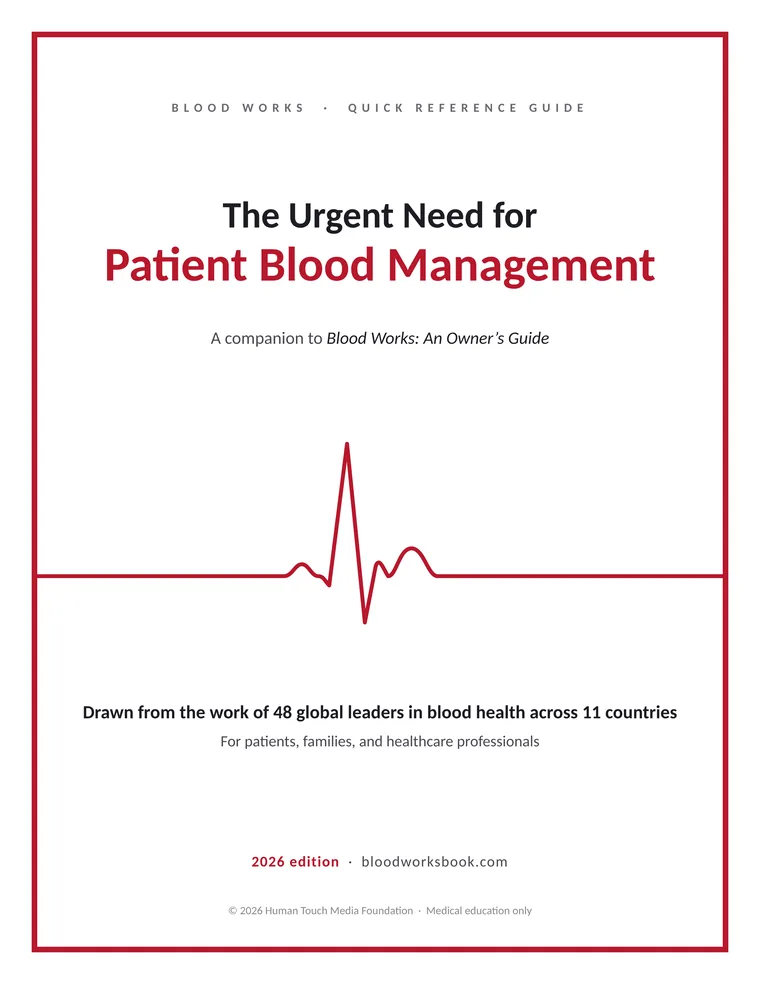
Quick reference guide · 2026 edition
The Urgent Need for Patient Blood Management
A 26-page guide from Blood Works: An Owner’s Guide, drawn from the work of 48 global leaders in blood health.
Written for patients, families, and healthcare professionals. Read it on screen or print it at home.
Get the guideWhat’s inside
- Your blood and Patient Blood ManagementWhy your own blood comes first, and how thinking on blood transfusion has changed.
- Managing your own bloodAnemia and iron deficiency, blood loss, and clotting, in surgery and other situations.
- If a blood transfusion is clinically indicatedWhat is given, how it is prepared, and what the evidence shows.
- Questions for your healthcare teamA checklist to take to appointments, and your right to informed consent and choice.
A look inside


Get your copy of the guide
Tell us where to send it. We’ll email you the download link straight away.

For patients, families, and healthcare professionals, wherever you are.
The full evidence
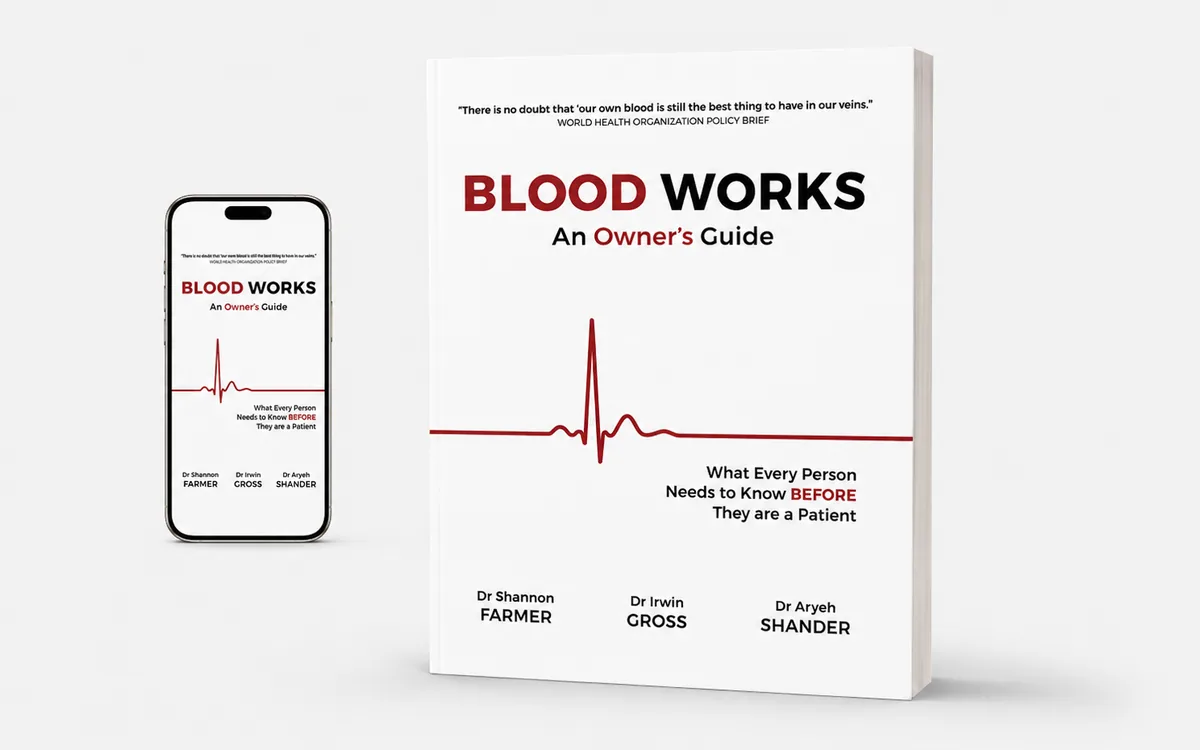
Blood Works: An Owner’s Guide
The guide gives you the essentials. The book gives you the full evidence, chapter by chapter, from 48 global leaders in blood health. In paperback and as an eBook.
Medical education only. Treatment decisions are personal, and are best made with your healthcare team.